
What Jesus Really Said on the Mount of Olives
A companion study to 'Don't Fear the Future—Anticipate It
Hello Master Minded Friends,
A few days ago I shared some thoughts on why we don't have to fear the future—only anticipate it. In that piece I mentioned a question I get often: did Jesus teach that the Church will endure the Great Tribulation?
I promised a deeper study on that, walking verse-by-verse through the Olivet Discourse (Matthew 24-25) to show what Jesus was really saying, and to whom. If you missed it, or if prophecy is a topic you love digging into, I think you'll find it worth the read.
What Jesus Really Said on the Mount of Olives
A companion study to "Don't Fear the Future—Anticipate It"
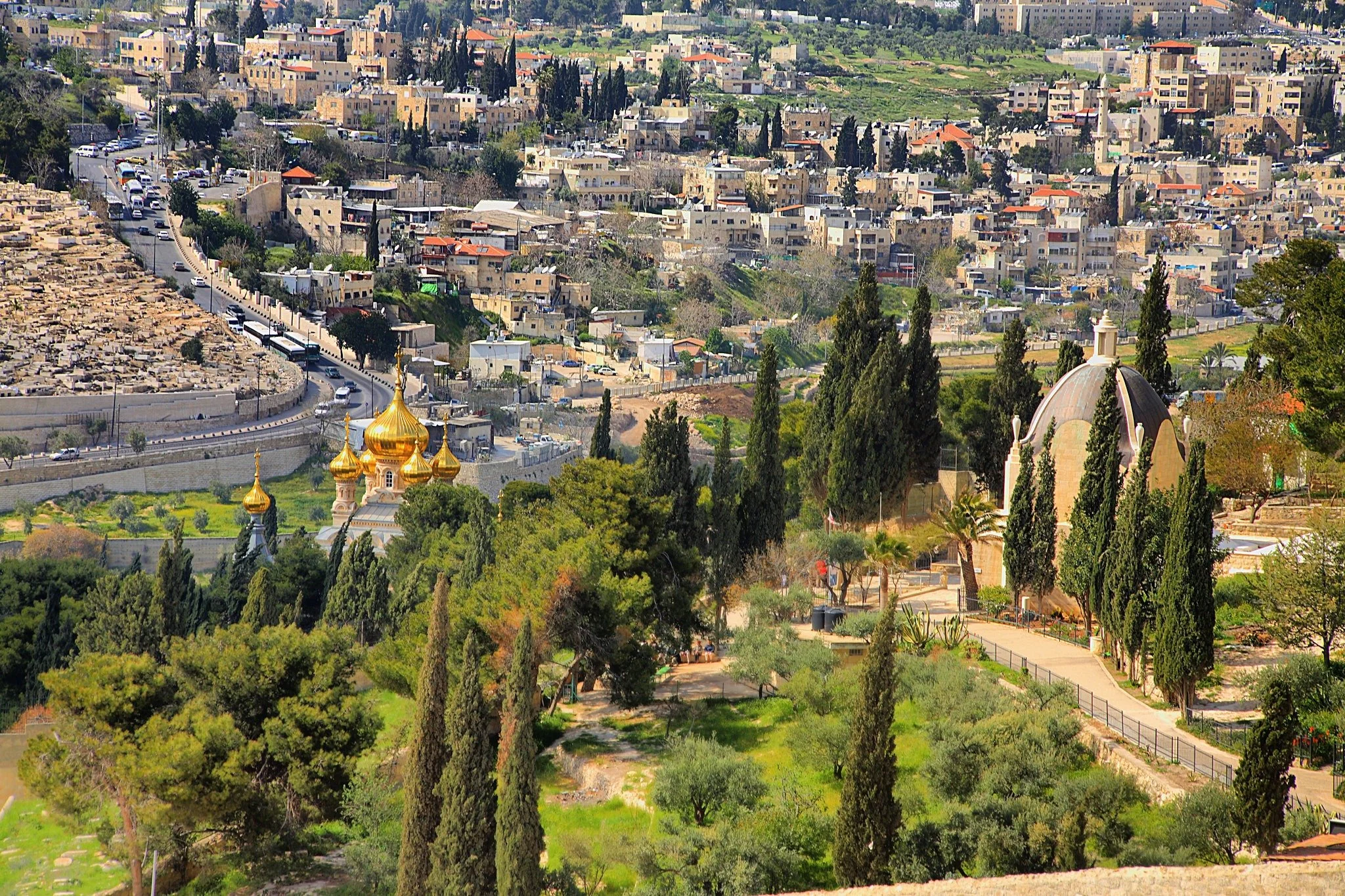
If you read my previous article, then you’re aware that we just returned home from Israel. While there, I had a chance once again to stand on the Temple Mount, looking across the Kidron Valley and focus on the Mt. of Olives. It was here that Jesus gave us an End Times briefing. It’s an amazing teaching we find in Matthew chapters 24-25, especially as we realize that we’re living in Bible times.
I continue to get questions about the Rapture and the various positions that are out there. Some of these questions have to do with the claim that in the Olivet Discourse (Matthew 24–25) Jesus, in effect, said the Church will have to endure all of the seven years of Daniel's 70th Week, including the Great Tribulation.
This won't be a verse-by-verse commentary — that would take a book — but let me walk through the passage carefully and see if I can shed some light on it.
Understanding the Context
It's important to see the overall context of the Olivet Discourse, because context is the single most important factor in understanding what Jesus was really saying, and to whom. It also helps us see what was going on in the disciples' minds.
It was just a couple of days before the crucifixion. Jesus and His disciples were walking over the Mount of Olives toward Bethany, where they were staying at the home of Mary, Martha, and Lazarus. The sun was casting light on the white Temple and its surrounding buildings — such a beautiful sight that the disciples called it to the Lord's attention.
In reply, Jesus said, "Do you see all these things? I tell you the truth, not one stone here will be left on another; everyone will be thrown down" (Matthew 24:2).
It was the second time they had heard Him say this. The first was a couple of days earlier, on what we now call Palm Sunday, when He told the people that because they didn't recognize the time of His coming, the city would be destroyed (Luke 19:41-44). He was holding the nation accountable for failing to understand Daniel 9:24-27, where nearly six centuries earlier the angel Gabriel told Daniel of a 490-year period that would begin when Israel received permission to rebuild Jerusalem and would culminate in the end of the age. Gabriel told Daniel the Messiah would come 483 years into that period (Daniel 9:25). Sure enough, here He was, standing in their midst, right on time.
There's no indication anywhere in the biblical record that Jesus ever told the disciples the coming Church Age would interrupt Daniel's prophecy and delay its completion by roughly 2,000 years. In fact, Acts 1:6 tells us that 40 days after the crucifixion, they still expected Him to restore the Kingdom to Israel at that moment.
It wasn't until James explained things to them some 20 years later that they understood how Israel was being set aside while the Lord took a people for Himself from among the Gentiles (Acts 15:13-18). A word study on that passage reveals a hint of the rapture, and shortly after, Paul became the first person in the world to present a clear teaching on the doctrine — saying he was revealing a secret in doing so (1 Corinthians 15:51; see also 1 Corinthians 15:51-53 and 1 Thessalonians 4:16-17).
So on that afternoon on the Mount of Olives, all the disciples could have known for certain was that 483 of the 490 years in Daniel's prophecy had passed, only 7 years remained, and Jesus had just told them the Temple, its buildings, and all of Jerusalem were going to be destroyed. It must have been a shock. Four of them — Peter, James, John, and Andrew — came to Him privately for clarification.
Piecing together Daniel's prophecy with what the Lord had repeatedly told them, they were beginning to understand He was about to die. So the questions they asked had to do with when the Temple and city would be destroyed, what the sign of His second coming would be, and what would mark the end of the age — which I believe they understood as the fulfillment of Daniel's prophecy (Matthew 24:3).
These were Jewish men speaking with the Jewish Messiah about the future of Israel. In His two-chapter answer, Jesus referred to Israel repeatedly — but never once mentioned the Church, or how much time would pass before the final seven years were completed.
After some general observations, Jesus summarized the future this way:
"Then you will be handed over to be persecuted and put to death, and you will be hated by all nations because of me. At that time many will turn away from the faith and will betray and hate each other, and many false prophets will appear and deceive many people. Because of the increase of wickedness, the love of most will grow cold, but the one who stands firm to the end will be saved. And this gospel of the kingdom will be preached in the whole world as a testimony to all nations, and then the end will come" (Matthew 24:9-14).
Not only is the Church never mentioned here — several details in this summary don't even apply to the Church. It's Israel that has always been hated by all nations because of Him. It's Israel that has experienced mass turning away from the Jewish faith. It's Israel that must remain faithful to the end to be saved. And it's Israel that has been promised a Kingdom on Earth as a testimony to all nations.
What Will Be the Sign of Your Coming?
Beginning in Matthew 24:15, Jesus gave the first specific sign of His coming — and again, it concerned Israel. The "abomination of desolation" requires a Temple, which means a national Israel back in the land, living under the Old Covenant. That hasn't been possible for nearly 2,000 years, but the disciples had no way of knowing that.
The people Jesus warned to flee would be living in Judea, the area around Jerusalem. He told them to pray their flight wouldn't happen in winter, when Jerusalem's weather turns harsh, or on the Sabbath, since covenant-keeping Jews are forbidden from traveling that day (Matthew 24:15-20).
Jesus said the abomination of desolation would signal the start of the Great Tribulation (Matthew 24:21). Jeremiah 30:1-11 tells us two things happen during this period: the nations among which the Jews have been scattered will be destroyed, and Israel will be purified in preparation for the promised Kingdom (Jeremiah 30:11). Jeremiah calls this "the time of Jacob's trouble" (Jeremiah 30:7) — the Old Testament name for the Great Tribulation — and says it will result in David becoming Israel's king (Jeremiah 30:9), something that hasn't happened yet.
The Church is nowhere in view here. Both Paul (Romans 5:9; 1 Thessalonians 1:10) and Jesus Himself (Revelation 3:10) promised the Church will not be present for this period.
"Then will appear the sign of the Son of Man in heaven. And then all the peoples of the earth will mourn when they see the Son of Man coming on the clouds of heaven, with power and great glory. And he will send his angels with a loud trumpet call, and they will gather his elect from the four winds, from one end of the heavens to the other" (Matthew 24:30-31).
Some claim this describes the rapture, based on the fact that the Greek word for "trumpet" appears both here and in 1 Corinthians 15:52. But that reading violates the clearly Jewish context of the passage without justification — a study for another time.
So far in His answer, the Lord has given the disciples an overview of the end times (Matthew 24:3-14), then a more detailed chronological sequence: the Abomination of Desolation, the Great Tribulation, and the Second Coming (Matthew 24:15-31).
And of the End of the Age?
Beginning in Matthew 24:36, Jesus turns His attention to what happens after He returns — His answer to the disciples' final question. We know this because of how specifically He identifies "that day and hour" (v. 36) and "the coming of the Son of Man" (vv. 36, 39).
Some argue that since no one will be "eating and drinking, or marrying and giving in marriage" before the Second Coming — the way people were in Noah's day — this passage (vv. 36-39) must describe the rapture instead, because the devastation of the Tribulation would make ordinary life impossible. I think that reading misses the point. People have always found ways to marry and carry on even in the worst of times. The Lord's point was simpler: just as people had no idea the world was about to end in the days before the flood, no one will know the world is about to end in the days before the Second Coming.
Notice, too, how the Lord compares "the days before the flood" to "the coming" of the Son of Man — not the days before His coming. The worst catastrophe in history will have just ended. Man's natural instinct after any disaster is to assume things will return to normal. But when people actually see the Son of Man coming on the clouds with power and great glory, they'll finally understand nothing will ever be the same. That's why they mourn when they see Him coming (Matthew 24:30).
"Two men will be in the field; one will be taken and the other left. Two women will be grinding with a hand mill; one will be taken and the other left" (Matthew 24:40-41).
These verses are often cited as evidence of a rapture after the Great Tribulation. Beyond the fact that this reading breaks the context and chronology of the Lord's message — and contradicts His promise to the Church — there's a translation issue here. The Greek word translated "taken" means "to receive unto oneself." A form of this same word shows up in Acts 15:13-18, translated "take for himself" (Acts 15:14), and literally means "to take for the purpose of carrying away." Before the Lord turns back to Israel to fulfill the remaining seven years of Daniel's prophecy, He will take for Himself a people from among the Gentiles and carry them away.
So "taken" isn't the puzzle here — "left" is. That word means "put away," and was often used in the context of divorce.
Rather than describing the rapture — where Paul's definitive teaching never once mentions unbelievers — these two verses summarize the Sheep and Goat judgment (Matthew 25:31-46), which takes place after the Second Coming and concerns the final destiny of those who survive the Tribulation: believers received into the Kingdom, unbelievers put away — separated from God.
The Lord closes His briefing with several parables describing the judgments He will carry out after His return. There's more here than this article can cover, but that's a study for another day.
Why It Matters
The Church is called the Bride of Christ — the group He treasures most, born in the book of Acts. Yet He never mentions the Church a single time in His signature discussion of the end times. That can only be explained by the fact that the entire Olivet Discourse is focused on Israel, not the Church.
Any attempt to apply this passage to the rapture of the Church requires pulling portions of it out of context — and in some cases, reinterpreting the text altogether. I hope this has been helpful as you study these things for yourself.
This study is a companion to "Don't Fear the Future—Anticipate It." If a friend forwarded this to you, we'd love to have you subscribe to receive Master Minded Ministries' teaching and updates directly. Mastermindedministries.org
As always, thank you for standing with Master Minded Ministries. Your support is what makes this kind of teaching possible.
Grace and peace,
PD
Don't Fear the Future—Anticipate It
It All Begins Here
Hello Master Minded Friends,
Every day the headlines seem to grow darker. Wars and rumors of wars, rising global tensions, economic uncertainty, natural disasters, and moral confusion dominate the news cycle. For many, conversations about Bible prophecy have become intertwined with fear, speculation, and endless attempts to connect current events to the end times.
Yet when the New Testament speaks about Christ's return for His Church, its emphasis is remarkably different. Rather than inspiring panic, the promise of the rapture is presented as a source of hope, comfort, and joyful anticipation. It is not intended to fuel anxiety about tomorrow but to anchor believers in the certainty that Jesus Christ will keep His promise.
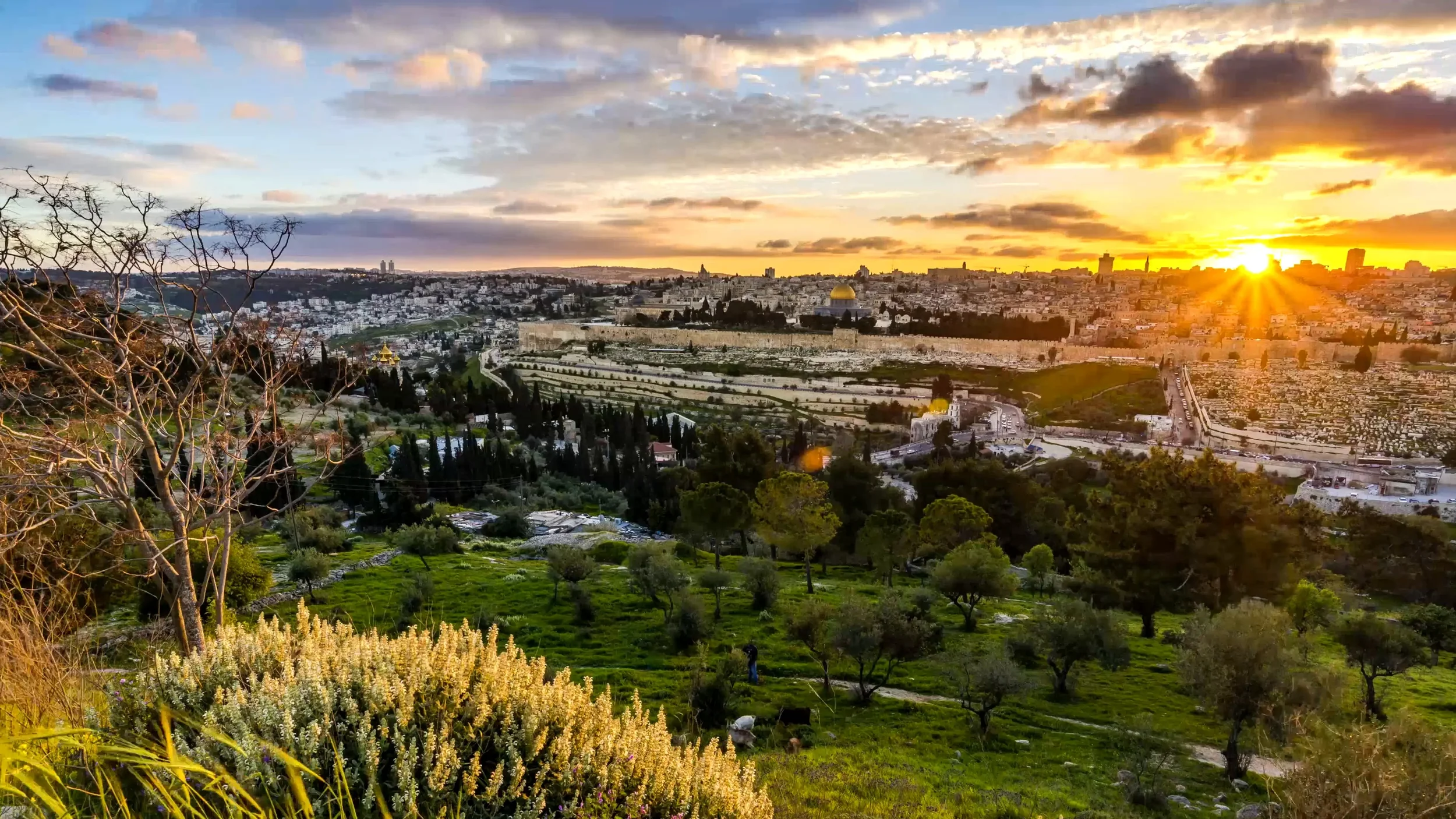
We just returned from a short but significant trip to Israel. While I was there, I had a chance to stand on the Temple Mount and gaze at the Mount of Olives. I found myself recalling the end-times briefing Jesus gave His disciples in Matthew 24-25 — and it was a meaningful thing to consider what He said, while standing right where He said it.
That briefing was heavy with hope, but also carried a warning about how we ought to be living our lives now. I came away with that on my mind, while the current situation in the Middle East was making plenty of noise in the background. The word everyone was using — Iran, the US, Israel, and every news outlet covering it — was "escalation." Meaning we should expect an ongoing and increasing involvement with Iran, not limited to those three nations, but drawing in the surrounding Middle Eastern nations as well. I'm reminded again: we are living in Bible times.
It's these kinds of ingredients, layered on top of the political division and disappointment all around us, that cause us to wonder: Will I ever live in a world that offers real peace and security?
The Bible says, "Yes."
Deep inside us, there is a sense of something more in life that drives us on. No matter what experiences you've had, no matter how wonderful they were, they were just a glimpse of what is still ahead. You are homesick for a place you have never been before, and that place is Heaven. You were wired this way.
The Bible says that God has put eternity in our hearts (Ecclesiastes 3:11). There is a sense inside of us that there is more to life than this. That's what keeps us moving forward.
It's something like the homing instinct we see in the animal kingdom — salmon making their way upstream with unshakable determination, or the swallows that return every year to San Juan Capistrano. It's a homing instinct that drives them.
We have the same thing, but ours is a homing instinct for a place we haven't seen yet. It is a homesickness for Heaven. Until that day, nothing will completely satisfy our lives. No matter what happens to us on Earth, it pales in comparison to this great hope.
The apostle Paul wrote:
"For our present troubles are small and won't last very long. Yet they produce for us a glory that vastly outweighs them and will last forever! So we don't look at the troubles we can see now; rather, we fix our gaze on things that cannot be seen. For the things we see now will soon be gone, but the things we cannot see will last forever" (2 Corinthians 4:17–18).
This is the hope of believers — the hope of a place called Heaven. There is a better world ahead. There is something greater than what we're experiencing now. This is what Jesus was talking about there on the Mount of Olives.
And that briefing on the Mount of Olives raises a question I get often — what did Jesus actually say to His disciples that day about the rapture, the Tribulation, and the Church? It's one of the most misunderstood passages in all of prophecy, and some teach that Jesus said the Church will endure the full seven years of Daniel's 70th Week, Great Tribulation included.
I don't believe that's what the text says — and I've written a companion piece walking verse-by-verse through Matthew 24-25 to show why. [Read the full study: "What Jesus Really Said on the Mount of Olives" →]
You and I are here for "such a time as this." Live with great expectation! Why? Because you can almost hear the footsteps of the Messiah! Let me close with…
A Word of Thanks
None of this — the trips that let us stand where Jesus once stood, the teaching that untangles hard passages like this one, and the ongoing conversation between a Preacher and a Rabbi that models what Jewish-Christian dialogue can actually look like — happens without you. Every article, every journey to Israel, every broadcast of The Teacher and the Preacher is made possible because friends like you believe this work matters enough to invest in it. If God has used Master Minded Ministries to deepen your understanding of His Word and His heart for Israel, would you consider standing with us financially today? Your gift doesn't just keep the lights on — it carries this message further, to more people, in a world that needs the hope of Christ's return now more than ever. Thank you for walking this road with us. We couldn't do it without you.